GLP-1 and Weight Loss: Why the drug alone is not enough?
The arrival of GLP-1 analogues marks a historic turning point in obesity treatment. For the first time, a pharmacological solution allows weight loss comparable to some bariatric surgeries.
But beware: losing weight does not always mean gaining health.
Behind this breakthrough lies a complex biological reality: these treatments profoundly alter your metabolism, digestion, and nutritional needs.
At KetoM+, we advocate an integrative health approach to secure your journey and optimize your results through precision nutrition.
1. How do GLP-1 analogues work?
GLP-1 (Glucagon-Like Peptide-1) is a hormone naturally secreted by the intestine after a meal. Analog products mimic this hormone with a prolonged duration of action:
-
At the brain level: They act on the hypothalamus to turn off the hunger signal and increase satiety.
-
At the stomach level: They slow gastric emptying, prolonging the feeling of fullness.
-
At the metabolic level: They optimize insulin response to glucose.
2. The major risk: Muscle loss (sarcopenia) and fatigue.
One of the major risks with GLP-1 is induced sarcopenia (muscle loss). If you lose 15 kg but 5 kg are muscle, your basal metabolism collapses, setting the stage for a massive rebound effect when stopping treatment.
3. The importance of "Low Carb" nutritional support
Using a GLP-1 analogue while consuming sugar is a metabolic nonsense. Sugar maintains insulin resistance and inflammation. Adopting a low-carb diet is the ideal partner because it allows:
-
Glycemic stabilization: It enhances the drug’s action by preventing insulin spikes.
-
Maximum lipolysis: It forces the body to draw on its fat as the main fuel, thus helping to preserve muscle tissue.
-
A global anti-inflammatory effect: By reducing poor-quality sugars.
4. Overweight and obesity: pre-existing micronutrient deficiencies.
Contrary to popular belief, overweight or obese patients have significantly higher deficiency rates than the non-overweight population, even before starting a diet.
-
Vitamin D : This is the most documented deficiency. Since vitamin D is fat-soluble, it is "sequestered" in adipose tissues and becomes less bioavailable in the blood
-
Iron : Obesity is a chronic inflammatory state. This inflammation increases hepcidin, a hormone that blocks iron absorption. Studies show a high prevalence of iron deficiency (low ferritin) in these patients
-
B vitamins : Deficiencies in B12, B9, and B1 are frequently observed, often linked to an ultra-processed diet, high in calories but poor in nutrients ("empty calories").
-
Magnesium and zinc : Overweight is associated with lower serum levels of magnesium and zinc, which worsens insulin resistance and inflammation.
5. Managing deficiencies and side effects of GLP-1 analogues
The effectiveness of GLP-1 analogues is sometimes accompanied by side effects that the patient must learn to manage. Solutions exist.
Digestive disorders and the microbiota
Slowed gastric emptying often causes nausea, gastroesophageal reflux, and altered intestinal motility (constipation or diarrhea). This environment changes the intestinal microbiota, which can lead to dysbiosis and promote intestinal hyperpermeability.
Risks of micronutrient deficiency
Because you often eat less, you mechanically ingest fewer vitamins and minerals. Additionally, chronic inflammation related to overweight consumes a large amount of antioxidant nutrients. The risk of micronutrient deficiencies (vitamins, minerals, and trace elements) increases.
Under GLP-1, patients often report a dislike for certain foods (meat, green vegetables) in favor of simpler carbohydrates that are easier to digest, further impoverishing the nutritional profile.
Slowed gastric emptying and changes in intestinal motility can interfere with the optimal absorption of certain nutrients, especially vitamins dependent on gastric pH (such as B12).
Why is high-precision KetoM+ supplementation your best ally?
-
Bioavailability : Under GLP-1, every microgram counts. KetoM+ uses vitamins in methylated forms (B9 and B12) as well as vitamin D, immediately available to the body.
-
Electrolyte balance : Potassium and magnesium citrates help fight fatigue and dehydration.
-
Intestinal health : The combination of lactoferrin and Saccharomyces boulardii protects the intestinal barrier, which is often compromised by slowed digestion.
-
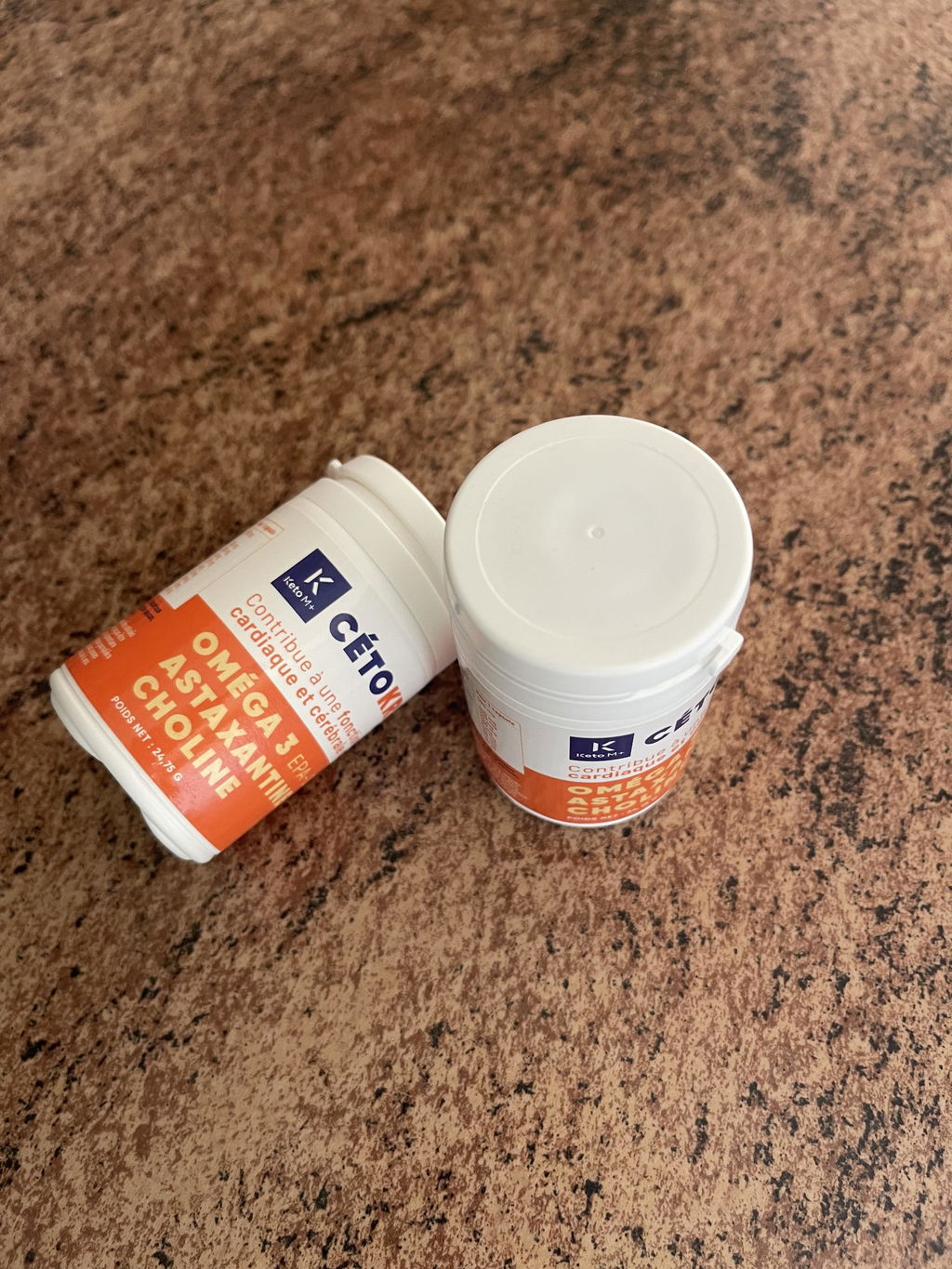
Quality lipids : DEK MCT oil provides immediate energy to the brain, while black seed oil supports blood sugar regulation. Krill oil, rich in omega-3 in phospholipid form, is better absorbed and supports cardiovascular health without unpleasant reflux. Its richness in astaxanthin makes it an ideal antioxidant.
-
Digestive enzymes facilitate digestion by limiting discomfort while improving nutrient absorption
Conclusion: Manage your metabolic rebuilding!
How not to regain weight after GLP-1?
Long-term success does not depend on the injected dose but on your ability to maintain your muscle mass and fill your deficiencies.
Your goal is to turn weight loss into a true metabolic rebuild.
By combining a low-sugar diet (low carb), your usual monitoring, and advanced supplementation, you provide your body with the necessary tools for lasting health, far beyond the scale.
Fewer calories should not mean less vitality.
Discover how KetoM+ fills your vitamin deficiencies to secure your weight loss.
Signed:
-
Sybille Kraft Bellamy, certified dietitian and founder of the KetoM+ laboratory.
-
Dr Laure Martinat, Scientific validation.
Bibliography
-
Yanoff LB, Menzie CM, Denkinger B, et al. Inflammation and iron deficiency in the hypoferremia of obesity. Int J Obes (Lond). 2007;31(9):1412-1419. doi:10.1038/sj.ijo.0803625).
-
Vimaleswaran KS, Berry DJ, Lu C, et al. Causal relationship between obesity and vitamin D status: bi-directional Mendelian randomization analysis of multiple cohorts. PLoS Med. 2013;10(2):e1001383. doi:10.1371/journal.pmed.1001383
-
Blundell J, Finlayson G, Axelsen M, et al. Effects of once-weekly semaglutide on appetite, energy intake, control of eating, food preference and body weight in subjects with obesity. Diabetes Obes Metab. 2017;19(9):1242-1251. doi:10.1111/dom.12932
-
Kerlikowsky F, Krämer K, Eggersdorfer M, Hahn A. GLP-1 Receptor Agonists - Good for Body Weight, Bad for Micronutrient Status?. Curr Dev Nutr. 2025;9(11):107587. Published 2025 Oct 30. doi:10.1016/j.cdnut.2025.107587
-
Scott Butsch W, Sulo S, Chang AT, et al. Nutritional deficiencies and muscle loss in adults with type 2 diabetes using GLP-1 receptor agonists: A retrospective observational study. Obes Pillars. 2025;15:100186. Published 2025 Jun 10. doi:10.1016/j.obpill.2025.100186
-
Wharton S, Davies M, Dicker D, et al. Managing the gastrointestinal side effects of GLP-1 receptor agonists in obesity: recommendations for clinical practice. Postgrad Med. 2022;134(1):14-19. doi:10.1080/00325481.2021.2002616
-
Kruzel ML, Actor JK, Boldogh I, Zimecki M. Lactoferrin in health and disease. Postepy Hig Med Dosw (Online). 2007;61:261-267.
-
Kennedy DO. B Vitamins and the Brain: Mechanisms, Dose and Efficacy--A Review. Nutrients. 2016;8(2):68. Published 2016 Jan 27. doi:10.3390/nu8020068